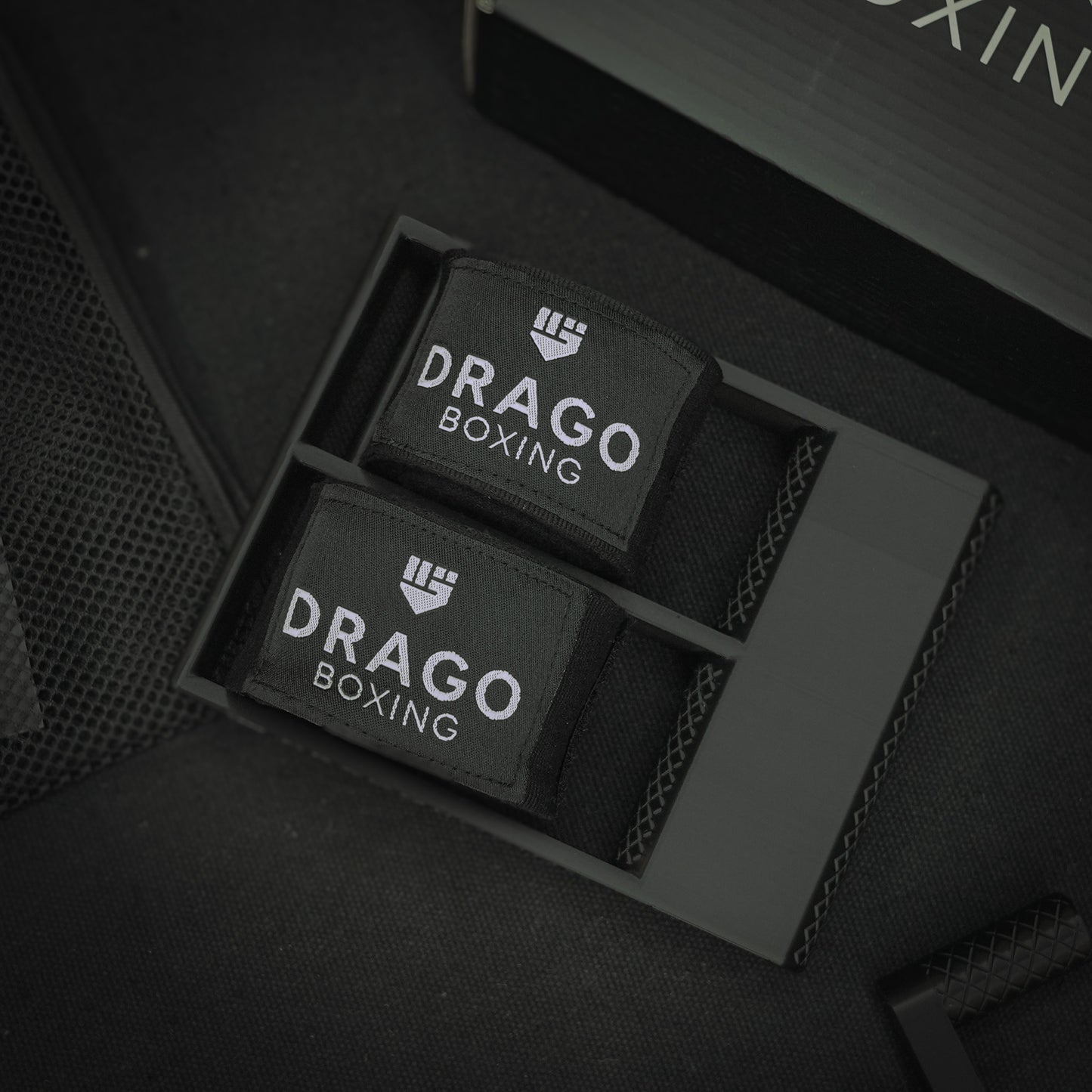
Fighters usually think about wrapping their hands before training. Not many think about properly maintaining their wraps after. The drying step is where most people go wrong - either tossing them straight into the dryer where the heat destroys the elastic, or balling them up wet in a gym bag where bacteria multiply within hours.
Properly drying hand wraps takes about 30 seconds of effort post-training and 4 to 8 hours of passive air drying. Done right, your wraps last 6-18 months. Done wrong, you're buying new ones every couple of months.
Quick answer:
- Unroll wraps fully right after training (don't put them in your bag balled up)
- Hang each wrap flat with both sides exposed to airflow
- Air dry 4 to 8 hours minimum, longer if the gym was humid
- Never use the dryer - heat destroys the elastic
- Roll them up only when fully dry
Why Drying Your Wraps Properly Matters
Hand wraps absorb a lot of sweat during training and will become a breeding ground for bacteria. This is what causes that gross smell that never fully washes out. Beyond the smell, moisture breaks down the fabric over time, shortening the life of your wraps and making them feel uncomfortable on your hands.
The bigger issue is the elastic. Most decent wraps use a cotton-spandex blend (the slight stretch is what makes them comfortable and snug). Spandex degrades faster when stored damp or exposed to heat. A wet wrap that sits balled up loses its elasticity twice as fast as one dried properly. That's why old wraps feel loose and don't grip your wrist the way they used to.
The Best Methods for Drying Hand Wraps (Compared)
Not every drying method is equal. Some preserve the elastic and fabric, some destroy them. Here's how the common methods stack up:
| Method | Time | Verdict |
|---|---|---|
| Air dry hung flat | 4-8 hours | Best. Preserves elastic. |
| Air dry with a fan | 2-4 hours | Excellent. Fastest safe method. |
| Hung from door-mounted roller | 4-6 hours | Best for compact storage. Both sides exposed. |
| Draped over a chair | 8-12 hours | Slow. One side stays damp. |
| Tumble dry on low (emergency only) | 15-20 min | Last resort. Shortens lifespan. |
| Tumble dry on high | N/A | Destroys elastic. Don't. |
If you only train a couple times a week, air drying flat is more than enough. If you train daily and need wraps ready the next morning, a fan cuts drying time in half.
Skip the Dryer (Even on Low)
The dryer is the single fastest way to ruin hand wraps. Heat degrades the elastic fibres and shrinks the cotton. You will notice your wraps start to feel tighter and won't go on as smoothly within a few uses. The velcro backing can also warp from heat, which is when it stops gripping properly.
Tumble drying on low is the only acceptable shortcut, and only in emergencies (you forgot until the night before a session). Even then, take them out while still slightly damp and finish them by hanging.
Don't Leave Them Rolled Up Wet
A rolled up wet wrap traps moisture in the middle layers. If you toss them in your bag after training without unrolling them first, they will stay damp for hours. The inner layers never see air. That's where mold spores get a foothold.
Always unroll your wraps completely before drying. Even if you're rushing, take the 15 seconds to unroll both and lay them somewhere flat.
The Best Way to Dry Hand Wraps (Step by Step)
- Unroll fully the moment you take them off. Don't put them back in your bag rolled. Even a 30-minute drive home rolled up gives bacteria a head start.
- Shake out excess moisture. A quick snap of the wrap removes surface sweat before drying.
- Hang flat with airflow on both sides. Door frame, towel rack, drying rack, anywhere both surfaces meet air. Avoid draping over flat surfaces where one side stays pressed down.
- Give them 4 to 8 hours. Touch the middle of the wrap to check - it should feel completely dry, not just on the outside.
- Only roll them up once fully dry. Rolling a damp wrap traps moisture again and undoes the whole process.
If you want the most efficient approach, the Drago Roller clips over a door frame, holds both wraps flat to air dry, then rolls both perfectly flat and wrinkle-free when dry. Both sides get even airflow, no draped-wrong situations, and the wraps stay ready to go for the next session.
Roll While Wet to Remove Wrinkles
One trick most fighters don't know: after washing, run each wrap through a roller once while it's still wet. The rolling action presses out the wrinkles the same way ironing does. Then unroll them fully and hang flat to dry. They come out smooth instead of stiff and creased.
This matters because wrinkled wraps create pressure points inside your gloves. A smooth flat wrap gives an even, comfortable fit.
How Often Should You Wash Hand Wraps?
Wash them every 1 to 3 sessions if you train hard. Every 3 to 5 if you do lighter work. Always use a mesh laundry bag so they don't tangle into a knot in the washer. Cold water, gentle cycle. Close the velcro before washing so it doesn't pick up lint and stop holding properly.
For the full step-by-step on washing, see our guide on how to wash boxing hand wraps the right way.
Common Mistakes
- Using a hairdryer. Concentrated heat from a hairdryer damages elastic the same way a clothes dryer does, just slower.
- Drying in direct sunlight for hours. UV breaks down both cotton and spandex over time. A few hours is fine. All-day exposure in a sunny window will fade and weaken the fabric.
- Rolling them up while still slightly damp. If the outer surface is dry but the middle still feels cool, they're not ready. Damp inner layers grow mold.
- Storing dry wraps in a sealed plastic container. No airflow means any residual moisture has nowhere to go. Store rolled in a ventilated mesh bag or open pocket.
- Washing only once a month. Sweat is acidic and breaks down fabric over time. Frequent gentle washing is better for the wrap than infrequent deep cleaning.
FAQ
How long do hand wraps take to air dry?
4 to 8 hours in average conditions. As fast as 2 to 4 hours with a fan blowing across them. Longer in humid environments or if the wraps are particularly thick. Always check the middle of the wrap by touch - it should feel completely dry, not just cool to the touch.
Can you put hand wraps in the dryer?
You can, but you shouldn't. The heat degrades the elastic fibres faster than anything else, shortens the lifespan significantly, and can warp the velcro backing. If you absolutely must use the dryer, tumble dry on the lowest possible setting and remove them while still slightly damp.
Can you dry hand wraps with a hairdryer?
Not recommended. A hairdryer concentrates heat the same way a clothes dryer does, just more directly. You will damage the elastic. Use a regular fan blowing across the unrolled wraps instead - it's faster than passive air drying and won't damage the fabric.
What happens if you don't dry hand wraps properly?
Three things: bacteria grows in the damp fabric and creates a permanent smell, the elastic degrades faster from sitting wet, and the wraps can develop mold in the middle layers. The combination usually shortens a $15 pair of wraps from 12 months down to 2 or 3.
Should hand wraps be rolled tight when stored?
Yes, but only once they are completely dry. Rolling damp wraps traps moisture inside the roll where it can not escape. Once fully dry, a tight roll keeps them organized and prevents the velcro from catching on other gear in your bag.
The Bottom Line
A lot of people neglect to properly dry their hand wraps after training. Unroll them immediately, hang them flat with airflow on both sides for 4 to 8 hours, never use heat, and only roll them back up when fully dry. Wash every 1 to 3 sessions in a mesh bag on cold. Your wraps will last 4 to 5 times longer than wraps that get tossed in the dryer or balled up wet in a gym bag.
Shane McCarthy is the co-founder of Drago Boxing. He has been boxing for 6 years, holds a Canadian national title, and has patents on two boxing products.
Read next